 ▲AIDS 2014, singer and activist Bob Geldof (c) YOUNGMOK LEE |
 ▲AIDS 2014, attendees from around the world listening to speeches (c) YOUNGMOK LEE |
The Current State of AIDS Treatment in Korea
In numerous countries including China, Taiwan, Germany, Australia, the Middle East/North Africa, France, Latin America, the United States, and the United Kingdom, new AIDS infections caused by homosexuality have surged. Last year, the number of HIV/AIDS infections in South Korea exceeded 10,000. The gender ratio among AIDS patients in Korea was 9 to 1, with most being male. Recent surveys show that same-sex relationships account for nearly 40% of all infection causes.
In Korea, preventive education, publicity, and support for infected individuals are implemented through public-private cooperation. Additionally, about 20 to 30 types of treatments are distributed domestically. Most hospitals and public health centers in Korea can diagnose HIV infection through blood tests. Public health centers currently conduct anonymous HIV testing to prevent cases where identities are not revealed and the timing is missed due to lack of testing.
 ▲ Volunteers explaining to participants at AIDS 2014 (c) YOUNGMOK LEE |
One of the biggest misconceptions about AIDS is that red spots appear all over the body, making anyone look like they have AIDS. However, even if you have AIDS, red spots do not appear. If kidney failure develops as a complication, red spots may appear, but this phenomenon does not occur solely with AIDS. HIV is the final stage of infection by spreading through blood and bodily fluids, and since infected individuals before progressing to AIDS appear almost as healthy as normal people, it is impossible to tell if they have HIV by appearance alone.
Above all, having a proper understanding of these individuals is crucial. This is because they have the right to be respected for their dignity and value as human beings before becoming infected. Those who wish to obtain more detailed information are encouraged to obtain more information through the National AIDS Information Center, the Korea Centers for Disease Control and Prevention.
 ▲AIDS 2014: Messages from those hoping the disease will disappear (c) YOUNGMOK LEE |
 ▲AIDS 2014, sculpture made using condoms (c) YOUNGMOK LEE |
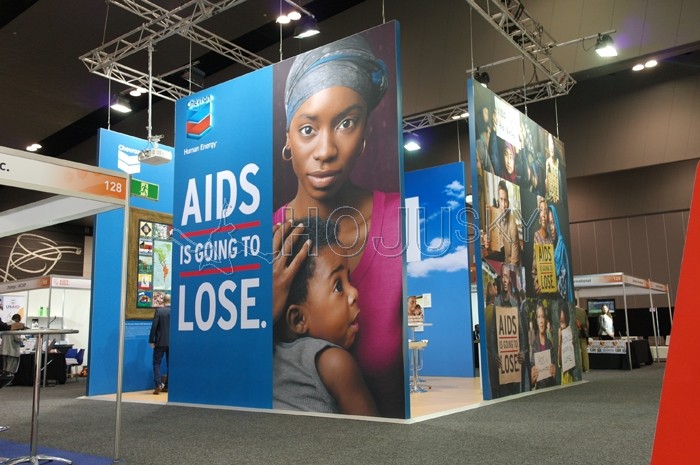 ▲AIDS 2014 ⓒ YOUNGMOK LEE |
AIDS IS GOING TO LOSE
The important message was that if the AIDS epidemic comes to an end in 2030, no one will be left behind. They also emphasized that social prejudice, discrimination, and control can actually cause epidemics, and that youth at high risk of infection and certain regions must be protected through effective prevention programs.
What's even more important is our perspective on AIDS. Experts also point out that people living with AIDS should be viewed not as other beings with curiosity, but as patients with chronic diseases. I believe the best way to prevent AIDS is to have a correct understanding of AIDS.
Through the 2014 International AIDS Summit, I believe it became an opportunity to understand the current state of AIDS and move forward, and the previous AIDS Summit is regarded as a gathering where many people's research and efforts were shared and communicated.
At the end of the closing ceremony, tribute was paid to those who lost their lives on the tragic MH17 passenger plane, and at the 21st International AIDS Conference to be held in Durban, South Africa, in 2016, research results showing that AIDS can be completely cured will be announced.
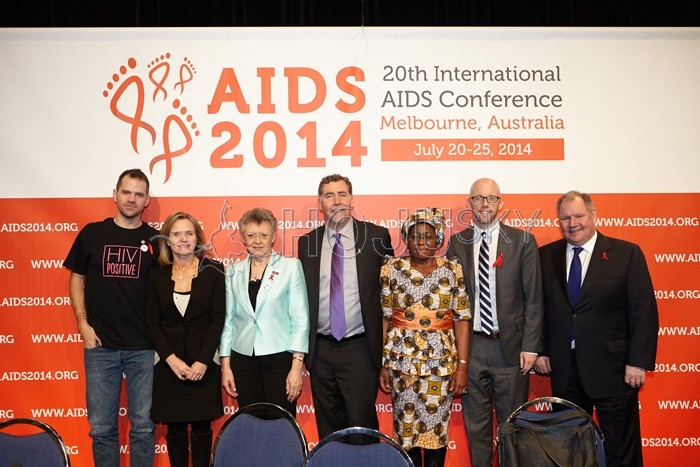 ▲AIDS 2014, the final day (c) YOUNGMOK LEE |
If the past has taught us anything, it's that silence equals death.
We do need to speak up. We are more powerful than we know it. It doesn't require any special talent.
It requires one simple thing—honesty
- John Manwaring, Australian person living with HIV
Comments 0
Log in to comment.