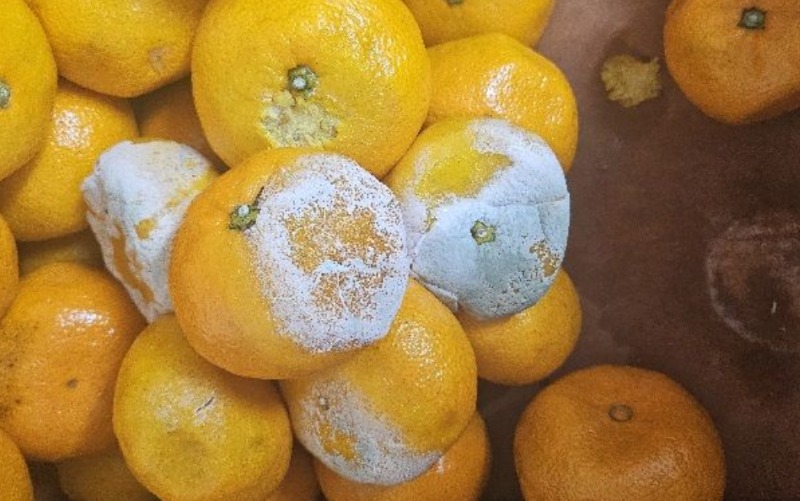
Tangerines in season contain a large amount of vitamin C, which helps supplement nutrients lacking in winter and prevent colds. However, when storing them for a long time, care must be taken to prevent mold growth, especially mold that grows on tangerines Cutting off the mold parts before eating them is dangerous. According to the Ministry of Food and Drug Safety, mold-covered tangerines should be discarded whole, because even if mold appears to be only in some areas, there is a high possibility that mold has penetrated deep into the flesh of tangerines due to their high moisture content. Eating tangerines that are invisible can threaten the health of the liver, kidneys, nervous system, and other health issues. Additionally, if mold comes into contact with the skin, it can cause skin allergies such as rashes or hives . It can cause symptoms, and if inhaled through the respiratory tract, it can worsen conditions like asthma or rhinitis. If you find moldy tangerines, discard them immediately, and wash any other tangerines nearby before eating. On the other hand, unlike tangerines, there are foods where mold can be partially removed and eaten; if mold has grown on hard cheese, you can cut out at least 2.5cm deep and wide from that part before eating. Also, for hard fruits or vegetables, it is acceptable to cut off only the moldy part before eating. Because these foods have a hard and dense structure, it is difficult for mold to penetrate, and their moisture content is relatively low, so the likelihood of toxin elimination is low.
Comments 0
Log in to comment.